Source pe fender liner for Cars, Trucks, and SUVs
Compare 14 verified listings for pe fender liner suitable for cars, trucks, and SUVs. Buyers can evaluate materials like ABS, fiberglass, and rubber, along with customization options, certifications, and shipping details from Chinese suppliers.
Key considerations
Products List


$20.00 - $100.00
Moq: 100




Comprehensive Sourcing Guide
Strategic Sourcing Guide for PE Fender Liner Procurement
Understanding Material Variations and Technical Specifications
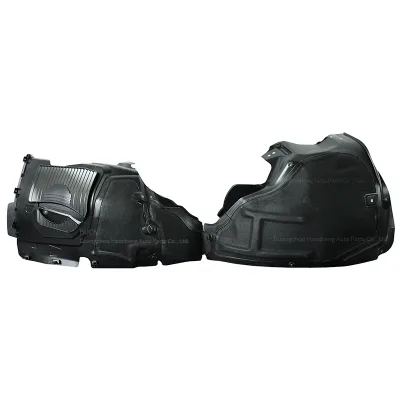
When sourcing a PE (Polyethylene) fender liner, buyers must first navigate the complex landscape of material definitions and technical specifications found in the current market. While the core keyword suggests Polyethylene, the available product data reveals a diverse ecosystem of materials including ABS, Fiberglass, Rubber, and Polyester FRP. This variation is critical because "PE fender liner" often serves as a generic industry term for plastic fender liners, yet the specific polymer grade dictates performance characteristics such as impact resistance, flexibility, and chemical stability.
The supplied product facts indicate that materials range from standard plastics like ABS to specialized composites like GFRP (Glass Fiber Reinforced Polyester) and Rubber. For a buyer specifically seeking Polyethylene, verification is required to ensure the supplier distinguishes between HDPE (High-Density Polyethylene) and other thermoplastics. The data notes that some products are classified as "Rubber/PE" standards, suggesting a composite or blended approach in certain applications. Furthermore, the thickness of these liners is frequently listed as "Customized," indicating that off-the-shelf standard thicknesses may not meet the specific structural requirements of every vehicle model. Buyers should expect to encounter products where the material composition is a blend, such as "Plastic+OTHERS," which requires careful review of the material safety data sheets (MSDS) to confirm the percentage of PE content.
The finishing processes also vary significantly, with options ranging from "Black Spraying Plastics" to retaining the "Alloy Original Color." For PE liners, the surface treatment is often "Smooth," which aids in aerodynamics and prevents debris accumulation. However, the "Molding Method" is a crucial technical parameter; most modern liners are produced via injection molding or rotational molding to achieve complex geometries that fit the wheel well precisely. The "OEM Standard" size specification suggests that many suppliers align their dimensions with original equipment manufacturer tolerances, but the "according to customer" standard option highlights the prevalence of custom-molded solutions for aftermarket or specialized fleet applications.
Compliance, Certification, and Regulatory Standards
Navigating the compliance landscape for fender liners requires a rigorous approach to certification and standard verification. The product data explicitly mentions "ISO" certification as a high-confidence fact, which serves as a baseline indicator of a supplier's quality management system. However, ISO certification alone does not guarantee that the specific fender liner material meets automotive safety or environmental regulations. Buyers must verify if the supplier holds additional certifications relevant to the automotive supply chain, such as IATF 16949, which is the global standard for automotive quality management.
The "prod_standard" field in the data shows values like "according to customer" or specific material standards like "Rubber/PE." This variability implies that there is no single universal standard for all fender liners. Instead, compliance is often driven by the specific requirements of the vehicle manufacturer or the regulatory environment of the destination market. For instance, emissions regulations may dictate the types of additives used in the plastic formulation, while safety standards may require specific fire-retardant properties.
Buyers should also scrutinize the "Quality" attribute, which is listed as "100% Test" in the provided facts. This suggests a commitment to quality control, but the specific nature of these tests (e.g., tensile strength, impact resistance, UV stability) must be defined in the purchase agreement. The "Leading Time" of 7 to 30 days often correlates with the time required for certification testing and batch verification. It is essential to request test reports that validate the material's compliance with regional standards, such as those from the Department of Transportation (DOT) in the US or ECE regulations in Europe. Without explicit documentation of these standards, the "ISO" label should be treated as a general quality indicator rather than a specific product compliance guarantee.
Cost Drivers and Pricing Dynamics
The pricing structure for PE fender liners is influenced by a multitude of factors, including material costs, customization levels, and logistical requirements. The observed price range in the market spans from $0.10 to $100.00 USD, a wide disparity that reflects the difference between simple, mass-produced components and highly engineered, custom-molded units. The lower end of the spectrum likely corresponds to standard, non-customized liners made from common plastic grades, while the higher end encompasses complex designs, specialized materials like reinforced FRP, or small-batch custom orders.
Material selection is a primary cost driver. While Polyethylene is generally cost-effective, the addition of other materials such as "Plastic+OTHERS" or the use of "Fiberglass" can significantly increase the unit cost. The "Molding Method" also impacts pricing; complex molding processes require more expensive tooling and longer cycle times, which are often passed on to the buyer. Additionally, the "Finishing" process, such as "Black Spraying," adds a layer of cost compared to raw molded parts.
Logistics and packaging play a substantial role in the final landed cost. The data indicates various shipping methods including "DHL/FedEx/TNT/Air/Sea" and seaports like "Shanghai." Air freight is significantly more expensive than sea freight, and the choice of shipping method can alter the total cost by a large margin, especially for heavy or bulky items. The "prod_packing" options, ranging from simple "Bag/Carton" to "Carton+Wooden Case" or "Pallet," also affect costs. Wooden cases and palletized shipping are more expensive but necessary for protecting the liners during long-distance transit, particularly for fragile or large components.
The "MOQ" (Minimum Order Quantity) is another critical factor. The observed MOQ range is 1 to 1000 units. Suppliers with low MOQs, such as the "2 PCS" mentioned in the data, may charge a premium per unit to cover setup and handling costs. Conversely, high-volume orders can leverage economies of scale to reduce the per-unit price. Buyers must balance their inventory needs against the MOQ to optimize cash flow and storage costs.
Typical Applications and Vehicle Compatibility
PE fender liners are designed for a wide array of applications, primarily within the automotive sector. The data confirms that the "Application" is broadly "Car," but specific models are also referenced, such as "MODEL S MODEL" and "Truck Fender Liner." This indicates that these components are versatile and can be adapted for passenger vehicles, commercial trucks, and potentially other heavy machinery. The "Fitting Position" is specified as "Front Fender" and "Rear Fender," highlighting the dual application potential for a single vehicle platform.
The "Product name" "fender liner front left" suggests that these components are often sold as specific left-hand or right-hand units, requiring precise matching to the vehicle's geometry. The "CAR MODEL" and "Model Number" fields in the data emphasize the importance of vehicle-specific compatibility. A PE fender liner that fits a sedan may not be suitable for a truck due to differences in wheel well size, suspension travel, and bumper clearance.
Furthermore, the "Lifespan" of these liners is noted as "5 Years" in some product listings. This metric is crucial for fleet managers and long-term vehicle owners who require durable components that can withstand road debris, moisture, and temperature fluctuations. The "Condition" is listed as "New," ensuring that buyers receive pristine components without wear or degradation. The "Brand Name" "BUCS" and "Warranty" of "6 Months" provide additional context for buyers looking for branded solutions with defined support periods.
Supplier Evaluation and Operational Capabilities
Evaluating a supplier for PE fender liners requires a holistic assessment of their operational capabilities, location, and customization flexibility. The "prod_origin" is listed as "China," with specific locations like "Shenzhen" and "Guangdong" mentioned. These regions are known for their robust manufacturing ecosystems, particularly in plastics and automotive parts. However, buyers should verify the specific factory capabilities rather than relying solely on the general origin.
The "Customization" attribute is marked as "Available," which is a significant advantage for buyers with unique requirements. This flexibility allows for modifications in size, material composition, and finishing. The "Standard" field, which includes "according to customer" and "Customized," further reinforces the supplier's ability to adapt to specific client needs. Buyers should inquire about the supplier's design and engineering support to ensure they can handle custom mold creation and prototyping.
Logistics capabilities are also paramount. The "Shipment" options include major carriers like DHL, FedEx, and TNT, as well as air and sea freight. The "Seaport" of "Shanghai" suggests a well-connected logistics hub, but buyers should confirm the supplier's experience with international shipping and their ability to handle customs documentation. The "Leading Time" of 7 to 30 days provides a baseline for production scheduling, but this can vary based on order volume and customization complexity.
Payment terms, such as "T/T" (Telegraphic Transfer), are standard in the industry, but buyers should negotiate terms that protect their interests, such as partial payments upon order confirmation and balance upon shipment. The "Selling Units" being "Single item" indicates that suppliers are flexible in their sales structure, allowing for both bulk and sample orders.
Quality Control and Long-Term Procurement Considerations
Ensuring consistent quality in PE fender liner procurement requires a robust quality control (QC) strategy. The "Quality" attribute of "100% Test" is a strong indicator of a supplier's commitment, but buyers must define the scope of these tests. Key quality metrics should include dimensional accuracy, material density, impact resistance, and UV stability. The "Surface Treatment" of "Smooth" is a visual and functional quality indicator, but it should be verified against specific roughness standards if aerodynamic performance is a priority.
Long-term procurement considerations involve building a sustainable supply chain. The "Warranty" of "6 Months" is a standard offering, but buyers should explore options for extended warranties or performance guarantees, especially for high-volume contracts. The "Lifespan" of 5 years suggests that the product is durable, but real-world performance can vary based on usage conditions. Buyers should request case studies or references from other clients to validate the longevity of the products.
Inventory management is another critical aspect. The "prod_packing" options, including "Bag/Carton" and "Pallet," should be selected based on the buyer's storage capabilities and shipping requirements. Efficient packing can reduce damage rates and lower logistics costs. Additionally, the "MOQ" flexibility allows buyers to adjust their ordering strategy based on demand fluctuations, reducing the risk of overstocking or stockouts.
Finally, buyers should maintain open communication with suppliers regarding any changes in material standards or regulatory requirements. The "prod_standard" being "according to customer" implies a dynamic relationship where specifications can evolve. Regular audits and quality reviews can help ensure that the supplier continues to meet the buyer's expectations over the long term. By focusing on these strategic elements, buyers can secure a reliable supply of high-quality PE fender liners that meet their specific operational needs.
Comparative Analysis of Material and Specification Options
To assist buyers in making informed decisions, the following table compares the key material and specification options observed in the market data. This comparison highlights the diversity of available products and the factors that influence selection.
| Feature | Option A (ABS/Plastic) | Option B (Fiberglass/FRP) | Option C (Rubber/PE) | Option D (Custom/Composite) |
|---|---|---|---|---|
| Primary Material | ABS | GFRP / Polyester FRP | Rubber / PE | Plastic + Others |
| Typical Finish | Black Spraying | Smooth | Smooth | Customized |
| Thickness | OEM Standard | Customized | Customized | Customized |
| Molding Method | Molding | Molding | Molding | Molding |
| Fitting Position | Front/Rear Fender | Front/Rear Fender | Front/Rear Fender | Front/Rear Fender |
| Application | Car | Car / Truck | Car / Truck | Car / Truck |
| Certification | ISO | ISO | ISO | ISO |
| Warranty | 6 Months | 6 Months | 6 Months | 6 Months |
| Lifespan | Standard | Standard | 5 Years | Variable |
| Packing | Bag/Carton | Pallet | As Required | Carton/Wooden Case |
This table illustrates that while the core function remains the same, the material choice significantly impacts the product's properties. ABS offers a balance of strength and cost, making it suitable for standard applications. Fiberglass provides enhanced durability and is often preferred for heavy-duty or truck applications. Rubber and PE combinations offer flexibility and resistance to impact, ideal for off-road or rugged environments. Custom composites allow for specialized performance characteristics but may come with higher costs and longer lead times. Buyers should align their material selection with the specific operational demands of their vehicles to ensure optimal performance and longevity.
FAQs
What materials are used for pe fender liners?
Materials include ABS, Fiberglass, Rubber, and Polyester FRP. Some products are listed as Plastic+OTHERS or Rubber/PE standards. Buyers must verify the specific polymer grade to ensure it meets their performance needs.
Can I get custom sized pe fender liners?
Yes, customization is available for size and thickness. The standard size is OEM Standard, but thickness can be customized according to customer requirements. This allows for tailored fits for specific vehicle models.
How long does it take to receive the order?
The leading time ranges from 7 to 30 days. This duration depends on the order volume and the level of customization required. Buyers should plan their inventory accordingly based on these production timelines.
What is the minimum order quantity for suppliers?
The MOQ range observed is from 1 to 1000 units. Some specific listings show an MOQ of 2 PCS, while others may require higher volumes. This flexibility allows buyers to start with small sample orders.
Which certifications do the suppliers hold?
ISO certification is a high-confidence fact for the suppliers. While this indicates a quality management system, buyers should verify if additional automotive standards like IATF 16949 apply to their specific needs.
Where are the pe fender liners manufactured?
Products originate from China, with specific locations in Shenzhen and Guangdong. The seaport for shipment is often Shanghai. Buyers should confirm the exact factory location for logistics planning.